How to avoid Drooping and Warping Gradually
A fence that looks right on install day can still wander over the years. The common outcomes are drooping panels, blog posts that lean a little, rails that turn, and pickets that cup or warp. What's irritating is that most of it is preventable, but just if you plan for time, weather, and small setup selections that include up.
I have actually seen a lot of "it should be the lumber" conversations, and sometimes yes, the hardwood issues. But in actual tasks, sagging and buckling normally boiled down to a few repeat transgressors: small blog posts, posts set as well shallow, inadequate rail positioning, bolts that were the incorrect kind for the atmosphere, and timber that never obtained a proper start on the moisture side of the formula. After that you include wind, sunlight exposure, and irrigation patterns, and the fence slowly tells you the story.
Below are the useful ways to keep fencings tight and square enough time to warrant the spend, whether you're hiring a fence contractor, contrasting a fence company quote, or selecting just how you'll keep the completed job.
Start with the pressures, not the fencing style
People commonly pick a fencing for its look initially. That's natural. Still, a fencing is primarily a series of structures created to take care of lots. A straight run with evenly spaced blog posts might make it through silently for years. The exact same fencing on the edge of a paddock, near a gusty corridor, or facing afternoon sun can act very differently.
Two pressures drive most long-term motion:
- Wind stress and turbulence Panels and slats catch wind like sails. Even "privacy" fencings typically imitate partly absorptive displays, which suggests wind tons aren't just about maximum stress, but additionally how pressure modifications across the fence face. That repeated press and launch adds to progressive flexing and sag.
- Moisture cycling Timber expands and contracts with damp and dry durations. If the fencing style traps wetness or if one side dries out differently from the other, you get cupping, twisting, and rail drift.
When you're dealing with fencing contractors Melbourne, the weather pattern matters. Melbourne conditions can swing from damp to completely dry, with lots of seasonal variation and periodic intense tornados. That mix is tough on fencings, especially those that were sealed badly or constructed with inconsistent clearances.
Post size, embedment depth, and spacing: the "monotonous" decisions that win
Most sagging is really a tale about insufficient rigidity. If articles are too small, also far apart, or established too shallow, the fencing framework will certainly bend. Flex ends up being tiredness. Fatigue becomes noticeable droop, then misalignment, after that the begin of bigger repairs.
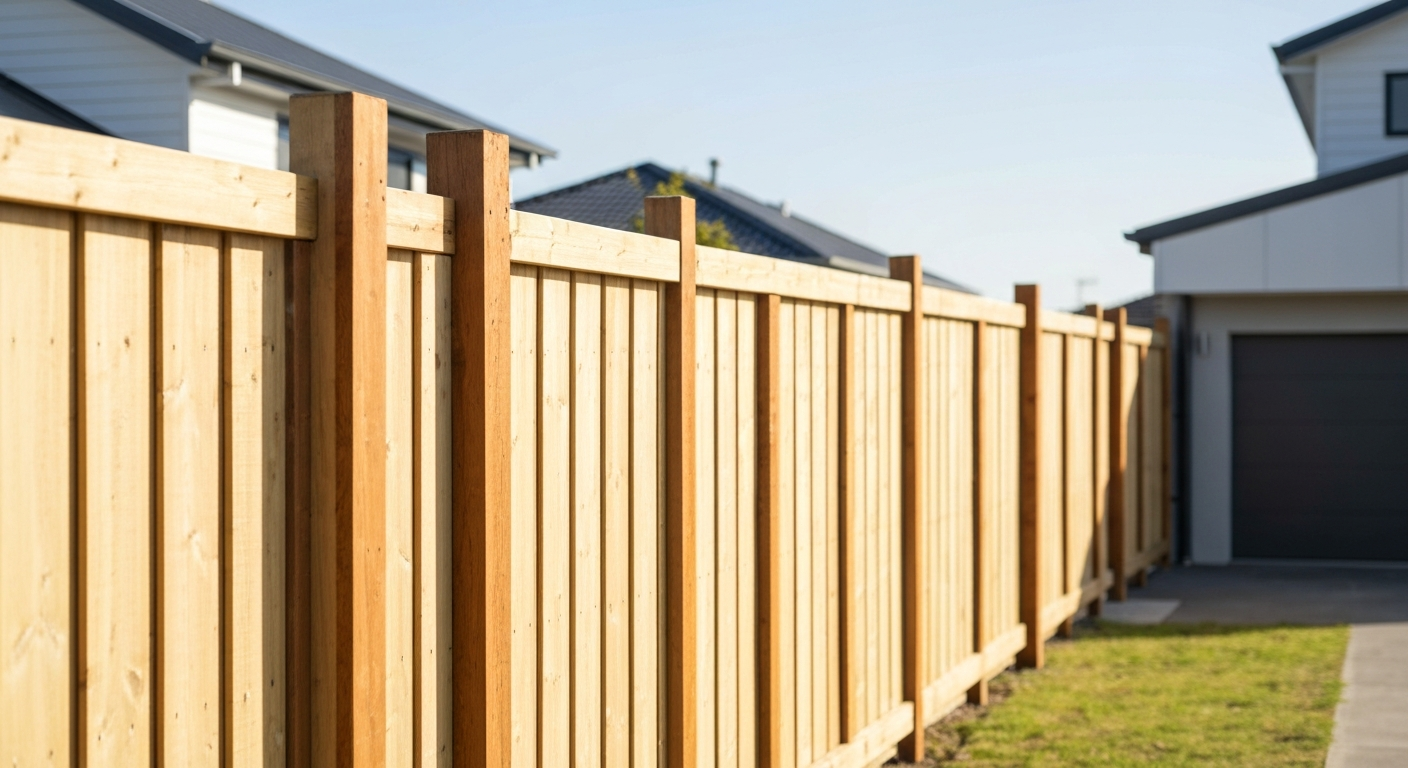
Here's what has a tendency to be decisive:
- Post spacing that's as well large for the product and height Broader spacing suggests each post has to bring more leverage. Bed rails and infill after that flex more. The fencing may look acceptable in the very first period, yet that very early flex "teaches" the wood or structure to settle permanently.
- Embedment depth that doesn't match dirt and drainage A superficial collection can be great in one lawn, then fall short in another where water accumulates or dirt is softer. The outcome is micro-movement throughout wet cycles. Over time, posts lean a fraction, rails follow, and drooping begins.
- Post size and go across section A little message can be "just solid enough" at mount day. Then one storm and the fence is completely changed.
If you've ever before stood next to a fence that's clearly sagging, you'll commonly discover the sag is even worse between particular articles. That's hardly ever arbitrary. It's the spans where the structure is under-designed.
If you're taking care of a fence installer or Fence installer Melbourne, ask the appropriate questions early: what are the planned post dimensions for your fencing elevation and infill type, and what spacing are they making use of along the whole run? A legitimate fencing company won't deal with these as universal defaults. They'll think about website problems, soil, and exposure.
Rails and frames: alignment is everything
Even when articles are strong, sagging can originate from the rail system. Bed rails are the backbone of horizontal toughness. If they're installed with inconsistent levels, incorrect spacing, or poor bracing, the fencing can drift.
A couple of functional details that matter:
- Level at installment, not "close adequate" If a top rail is a little out of degree throughout a long term, it does not simply look odd. It establishes the fencing up for unequal lots circulation. The lower periods take more anxiety and sag faster.
- Proper rail fastening Bolts that are also tiny, inadequately situated, or the wrong type for exterior exposure can loosen slowly. With wood, the incorrect screws can split rails, particularly near edges. With steel elements, rust resistance matters.
- Bracing at the ends End blog posts do most of the work due to the fact that they stand up to the fence's pull and lateral press. If end assemblies are underbuilt, the whole run can creep out of alignment.
This is one reason people end up calling a fence contractor once more after "a couple of years." It's not always the infill that fell short. It's often the covert framework stiffness.
Timber fences: prevent warping by handling dampness from the within out
Timber is a living material. It does not just take in water, it reacts to moisture gradients. That's why wood can warp also when it seems "dry adequate" to the eye.
To stop bending:
- Use treated hardwood correctly Dealt with timber resists degeneration, but it still requires correct handling and assembly. Reducing and drilling can subject fresh surface areas. Those subjected factors commonly need appropriate securing, depending on product guidance.
- Keep the "wet face" consistent If one side of a fencing board remains damp more frequently than the other, cupping and turning are more probable. This can be driven by how the wood sits relative to sun and fundamental rain, but it additionally happens when air flow is blocked or when boards are installed with poor drain gaps.
- Leave growth and tightening space Tight spacing can sound like a tougher fence, however it can catch motion. Timber requires room to move. When boards are jam-packed snugly, they can press against each various other, pushing the structure out of square.
- Seal and maintain A hardwood fencing that never ever obtains maintenance is a gamble. In Melbourne, the fence face that gets the toughest sun can dry out tougher and much faster, creating a stronger moisture cycle. A properly kept layer slows down that cycle and lowers deforming pressure.
If you have actually obtained a distorted section currently, don't presume it's "too late." Often you can fix or lower movement by dealing with drain, changing a small collection of boards, and re-sealing subjected ends. More often, though, contorting accelerates when the underlying creates remain.
Metal and Colorbond style fences: sagging frequently originates from framework design and corrosion management
Metal fencings are much less susceptible to classic wood warping, but they are not unsusceptible to sagging. With steel, droop usually comes from structure flex, inadequate supporting, or fasteners and fixings that loosen over time.
A couple of common reasons I've seen:
- Panels built to work as structure when they're suggested to be infill If the style relies upon the infill to offer tightness, you'll spend for it later on when lots increase.
- Weak positioning and uneven tension in sustaining rails Tiny misalignment throughout mount can develop into noticeable droop once the fencing takes wind tons for a couple of seasons.
- Corrosion at fixings When different metals are used together, or when the incorrect layer system is utilized, you can obtain deterioration at connection factors. Deterioration does not constantly "rust through" right away. Often it loosens correctings first.
This is where picking a fence company that understands long-term outside performance matters. A sheet of steel can make it through the climate well. The joints and braces are frequently the genuine weak link.
Pickets, slats, and panels: the infill selection influences stress
Infill isn't just decoration. It alters just how pressures stream with the framework. A dense privacy display captures even more wind than an extra open style. Taller fences additionally enhance leverage.
If you're picking a fence design, think of the direct exposure:
- A fence a sheltered yard could tolerate bigger spacing between rails.
- The fence that leaves a road border or an edge where gusts funnel will certainly need more durable framing and end bracing.
When fence contractors discuss "architectural tightness," they are frequently talking about exactly how infill is sustained and where lots take a trip. That discussion deserves having prior to you secure the design.
Concrete grounds and drain: the anti-sag insurance
Posts relocate when the footing moves. Also a minor shift can cause the whole fence go to come to be slightly out of placement, and when you see that drift, it's tough to reverse.
Look at drain patterns in your backyard:
- Does water swimming pool at the base of the fence line after rain?
- Are there sprinkler systems that wet the exact same area repeatedly?
- Is the soil sandy or soft, and does it small unevenly?
In damp conditions, blog posts can raise and work out slightly. Over time, that duplicated motion can loosen up the framework and contribute to sag.
If you're dealing with fencing contractors Melbourne, mention where water accumulates after storms. A great Fence installer Melbourne group will factor that into footing style and exactly how they establish the messages. The "same information almost everywhere" technique is where troubles begin.
The small details: fasteners, knots, board orientation, and ends
A vinyl fence installer fencing's biggest failures in some cases originate from small choices.
- Fasteners Outside mendings require proper deterioration resistance and appropriate size for the work. Too small a screw, or the wrong sort of covering, can indicate helping to loosen. Likewise, edge ranges matter to avoid splitting, specifically in timber rails and pickets.
- Timber board selection Knots and issues can be great, but board stability issues. Boards with significant bending tendencies at install might never ever fully resolve the means you want.
- Board orientation Some timber boards mug one way greater than the other depending upon just how the board was crushed. Installing with consistent orientation about sunlight direct exposure can lower twisting.
- End sealing Fence ends are where moisture gets in first. If ends were left unsealed, motion typically shows up there and after that works along the board.
These are specifically the type of details that separate "it looks excellent currently" from "it stays in this way."
Maintenance routines that in fact protect against future movement
Maintenance sounds like additional work, but the objective below is not countless re-coating. The goal is to stop the fencing from getting in a high-risk state, like heavy layer failure, water capturing, and loosened fixings.
Pay interest to these signals:
- Sections that start to look somewhat lower in between two posts
- Rails that develop voids at one side of fixings
- Pickets that cup or spin more than bordering sections
- Coating that has actually gone patchy or chalky, specifically on the sun-facing face
You don't need to inspect the entire fencing daily. However you ought to examine after significant tornados and at seasonal transitions.
A useful quick check (takes minutes, saves fixings)
- Walk the line and note which extends appearance less than the rest
- Press carefully on rails and panels at a few random points, listen for activity
- Look for early gaps around repairings or brackets
- Check wood for peeling finishing, dark discoloration, or end grain breaking
- Review drainage, particularly any type of spots where water pools at the base
That's a light touch, yet it catches the beginning of droop before it comes to be a bigger architectural issue.
Repair without making it worse
Once sagging or warping appears, individuals occasionally attempt temporary repairs that make the following year harder. For example, adding a few boards across a weak span can conceal the signs and symptom, but it can additionally alter lots paths and stress attachments further.
A much better strategy is to diagnose what's relocating:
- If blog posts are leaning, you might require to address footing and message security, not just swap boards.
- If rails are out of level, rails need re-alignment and proper fastening, not just "straightening out" by force.
- If hardwood has deformed, changing particular boards is often much better than trying to flex them back into shape, specifically if dampness conditions haven't changed.
When I recommend property owners, I typically ask one question that appears basic but clarifies the issue fast: does the movement modification after rain, or is it constant regardless of weather? If it changes after wet conditions, moisture biking and water drainage are likely vehicle drivers. If it's consistent, structural tightness and alignment concerns are usually the bigger story.
What to ask a fence contractor prior to they begin (so the construct stands up to drooping)
If you're engaging a fence company or obtaining quotes from various Fence company alternatives, one of the most important questions have to do with structure and durability, not just cost per metre.
Here are a few discussions worth having, and the answers you must expect:
- What post dimension and spacing are you using for my fencing elevation and exposure?
- How will you handle end settings up and edges where loads concentrate?
- What dealings with are you using, and are they suitable for the material and environment?
- How is the lumber secured at the cut factors, and what maintenance routine do you suggest for coatings?
- How will certainly the messages be set, and what's the plan for drain in this yard?
A specialist Fence installer Melbourne or fencing contractor must chat through these clearly. If their answer is vague or generic, that's a caution sign.
A simple "today" strategy if your fence is currently revealing movement
If you're seeing very early droop, don't disregard it. The earlier stage is when fixings are normally most affordable, and when you can prevent extra extensive frame movement.
Here's an uncomplicated approach that keeps you from chasing the wrong problem.
- Identify the periods where the drooping beginnings and whether it straightens with certain articles or rails
- Check if activity is worse after rainfall, then examine drain and soil softness at those bases
- Inspect correctings for looseness, corrosion, or voids around braces and fasteners
- Correct the frame positioning first, after that replace just the lumber boards or panels that have actually really lost form
- Improve continuous dampness control, sealing and air flow spaces where needed, so the fixed area is much less likely to duplicate the same failure
This sequence issues due to the fact that if you change infill while the structure continues to move, the brand-new items will typically fail once again sooner than you would certainly expect.
Common edge instances that trigger issues (despite good materials)
Some fencings fail early not due to low quality, but because of uncommon conditions.
- Sloping ground If the base level changes dramatically, inaccurate post lengths or inconsistent footing can develop uneven tightness. The fencing after that "steps" aesthetically and additionally experiences uneven load.
- Irrigation and color patterns Sprinklers that damp one fencing face more frequently, or trees that obstruct sunlight and slow-moving drying, can produce stronger wetness gradients.
- Site edges and wind tunnels Corners usually experience higher wind lots. Even if the straight sections are fine, completions can come to be the weak point.
- Retaining wall surfaces and soil movement Soil adjacent to wall surfaces can shift. When the fencing message base is affected, sagging might turn up seasonally.
When you collaborate with fencing contractors Melbourne or any fence company Melbourne consumers handle, these edge cases should be talked about. They transform what "correct" looks like throughout installation.
Material selections for long term security: what tends to last best
I'm not mosting likely to tell you there's a single ideal fence product for every single property. The very best option is the one that matches your exposure and your upkeep willingness.
Still, there are clear compromises:
- Timber Excellent look, all-natural feel, and very easy repair work, yet it requires maintenance and mindful moisture monitoring to lower warping.
- Metal infill with great structure design Usually much more forgiving with maintenance, but the framework, fixings, and finish supporting still make a decision whether droop appears.
- Composite or PVC design systems
These can resist rot and frequently take care of moisture much better than hardwood, but they still relocate thermally and need correct setup clearances and architectural support.
No issue the product, droop and contorting prevention comes back to the exact same principles: solid framework, proper message setting, thoughtful drainage, and building and construction details that appreciate activity over time.
The genuine goal: a fence that can move somewhat without shedding shape
A fence doesn't need to be perfectly inflexible for life. Outside frameworks increase, agreement, and flex within limitations. The goal is to provide the fence enough stiffness that little motion doesn't end up being irreversible droop.
When a fence contractor develops with appropriate message spacing, robust rails, appropriate fastening, and excellent end supporting, you obtain a fence that weathers tornados without slowly "quiting." And when the wood side is taken care of with securing, drainage understanding, and regular checks, you decrease the moisture slopes that trigger warping.
If you're planning a new install, it's worth investing time up front with a fence installer or Fence company that treats these details as architectural concerns, not simply part of the task. That's just how you maintain the fencing looking straight after the initial summertime, and still looking respectable years later, even when Melbourne weather condition chooses to be dramatic.